Tino Pizza Takes the Room
Paintings, sculptures and characters accumulate until the gallery becomes a complete world.
All Journal stories →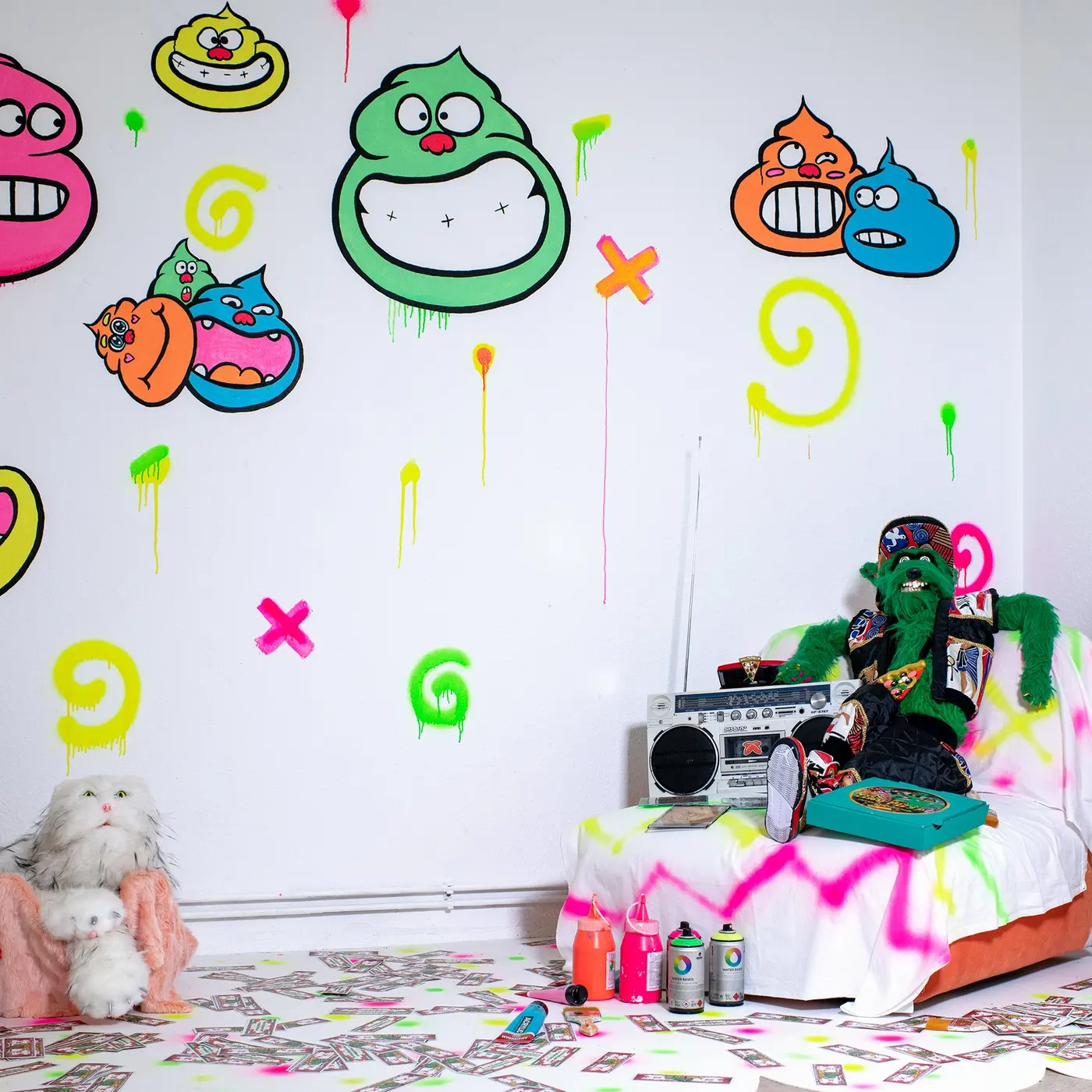
Carte Blanche was built as an environment with its own logic.
A world across the room
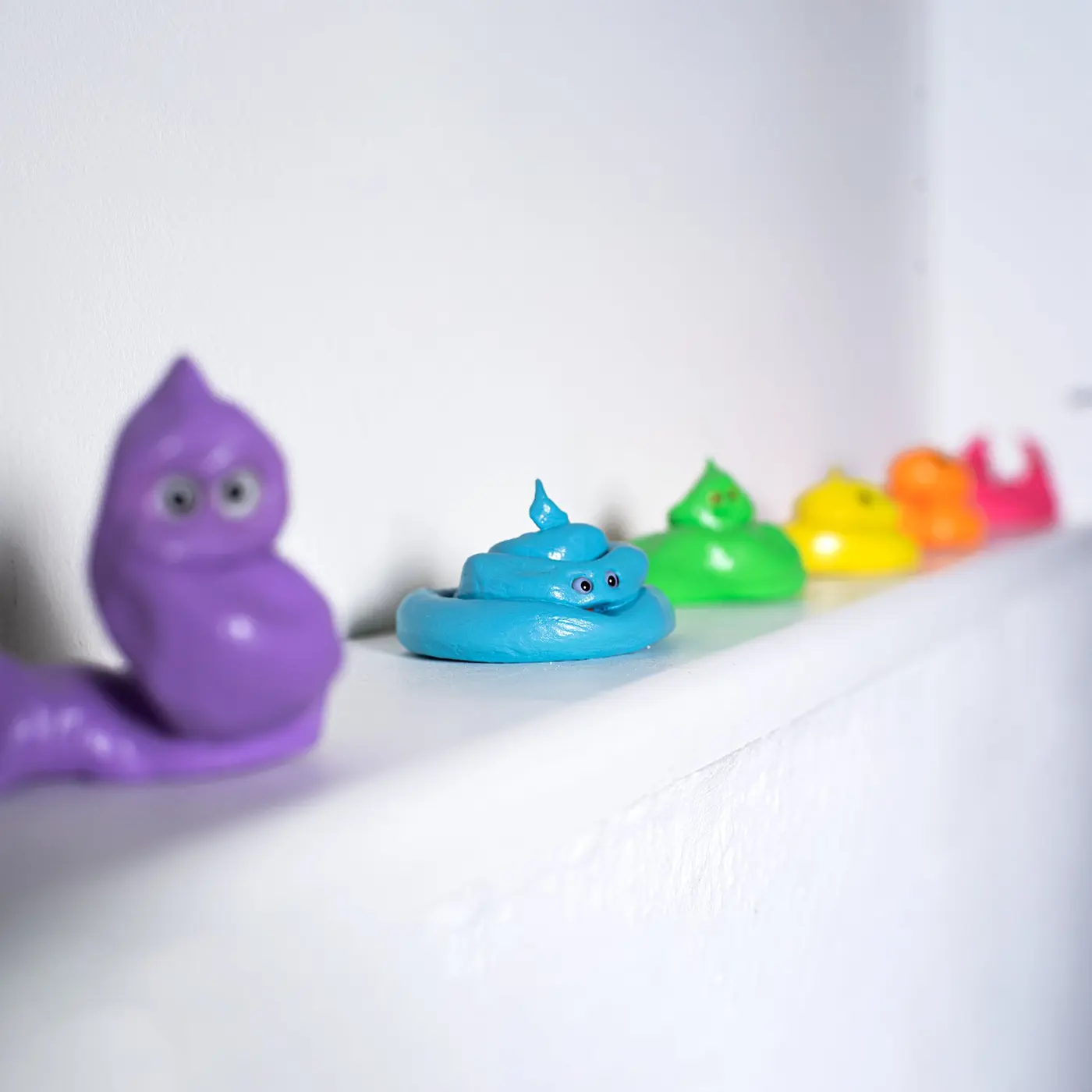
Tino Pizza moves between painting, objects, sculptural figures and graphic elements as one continuous language. The same character can appear on a wall, as an object or as a tiny detail somewhere else in the room.
That repetition builds a world across the room.
From the JournalThe joke gets you into the room. The detail keeps you there.
Characters become architecture
The figures help organise the space. Their scale, colour and placement create landmarks inside the exhibition and make the gallery feel inhabited.
As visitors move through the room, they discover relationships between objects that are easy to miss at first glance.
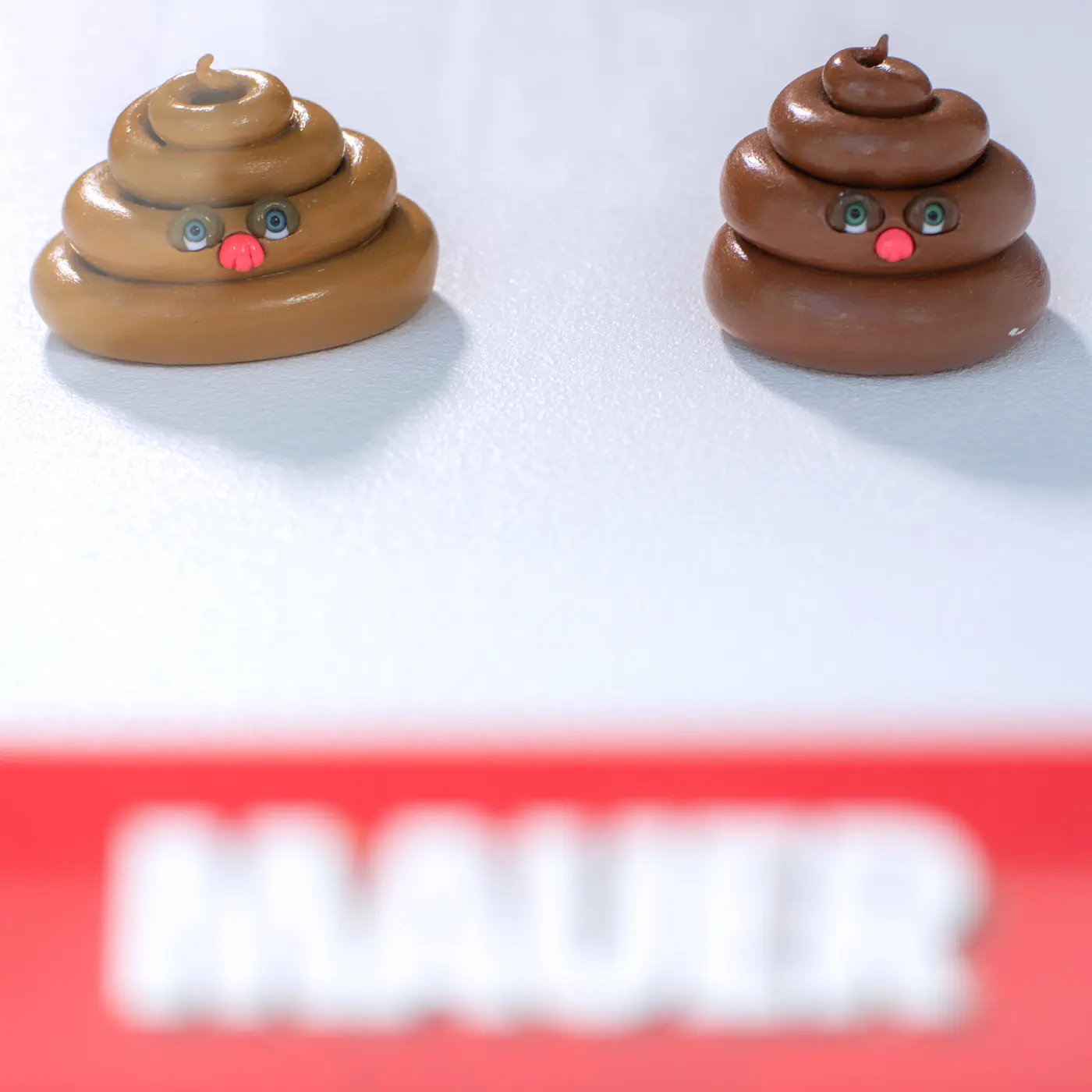
Humour with obsessive detail
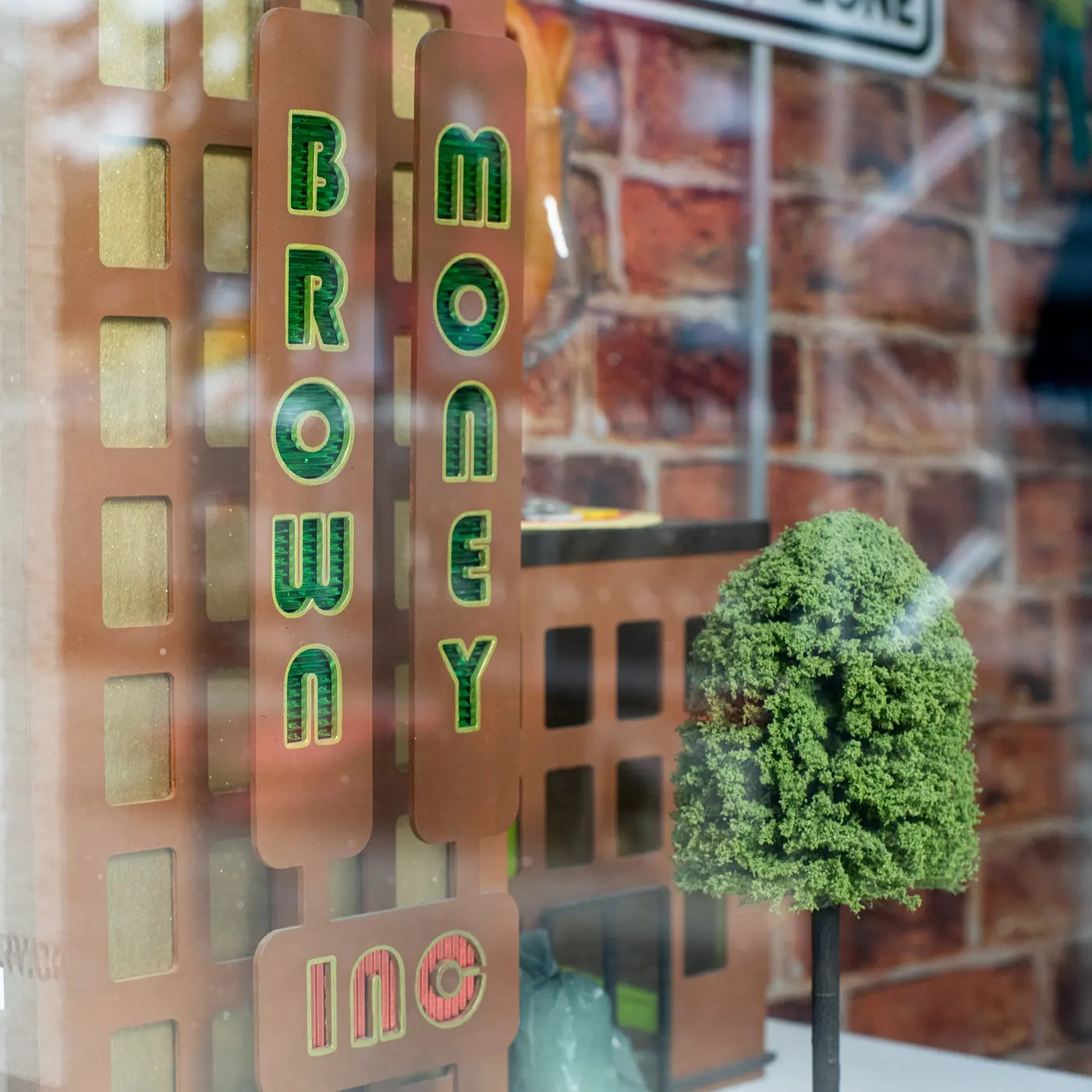
The work is funny immediately and meticulously made. Humour is supported by a high level of making, repetition and visual control.
The longer you look, the more the exhibition reveals small decisions about material, scale and character. That combination of accessibility and obsessive detail is exactly what gives the show its staying power.
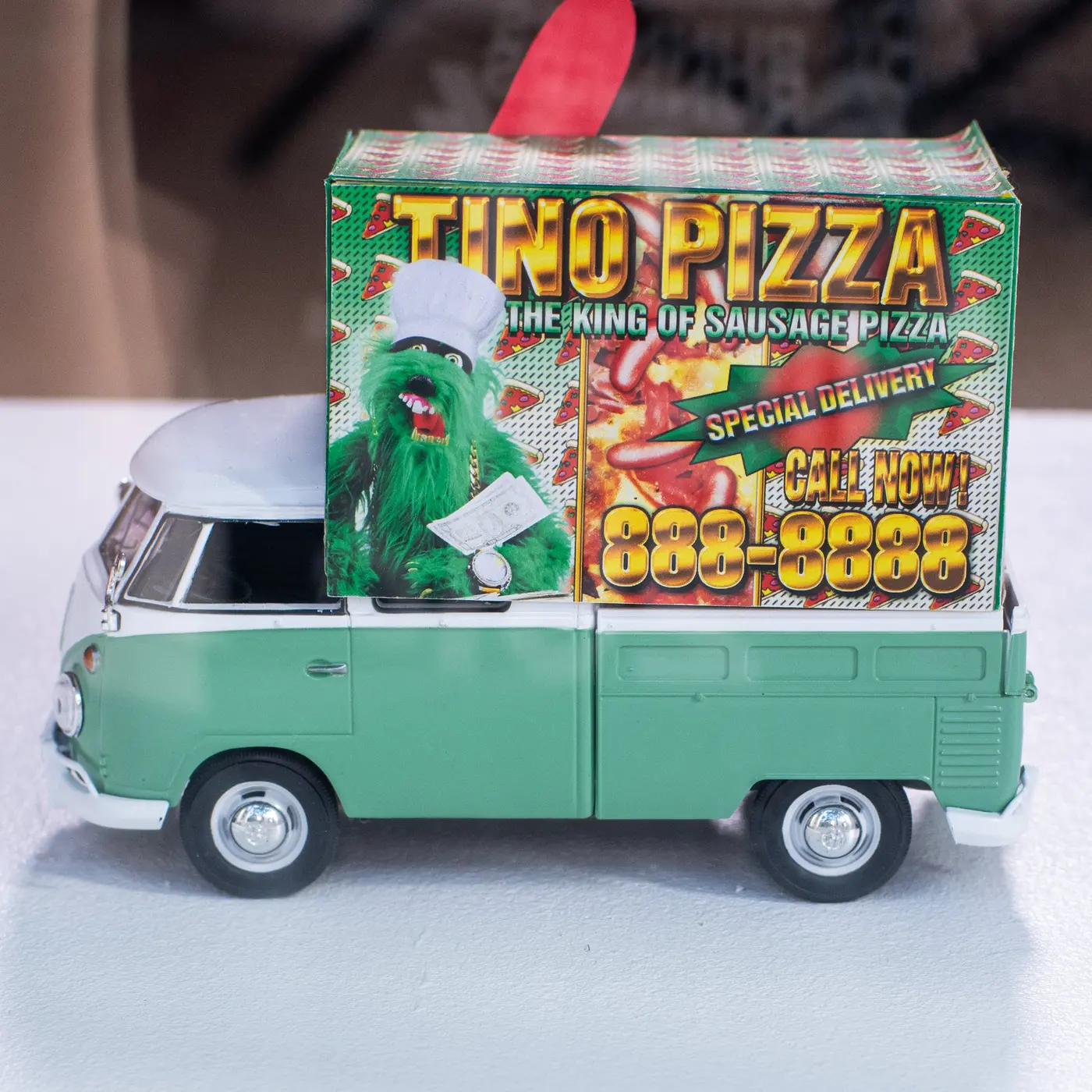
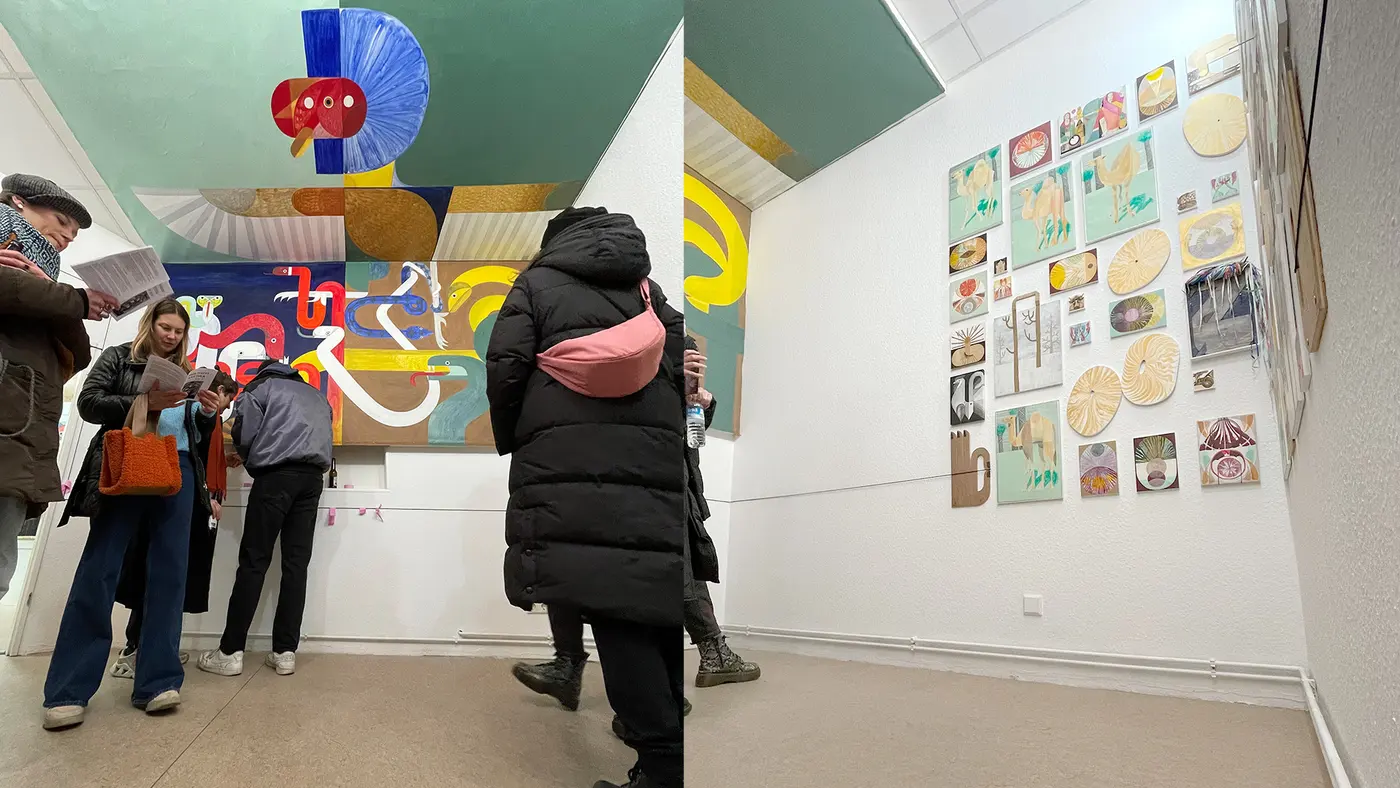
Opening Nights at Mauer
The crowd, the works and the atmosphere that turn an exhibition into a living place.
Read next story →